
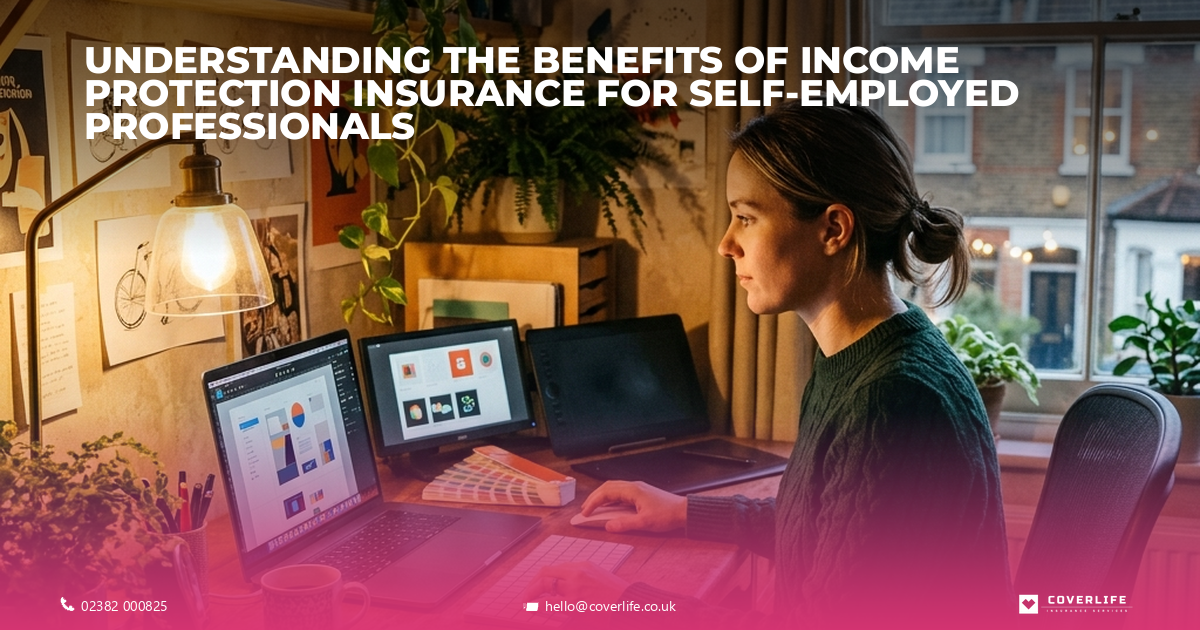
Income protection insurance provides self-employed professionals with a financial safety net by replacing a portion of their income if they are unable to work due to illness or injury. This support helps maintain financial stability during recovery, ensuring that essential expenses can still be met.
Why Self-Employed Professionals Need Income Protection
Self-employed individuals lack the sick pay and employee benefits that salaried workers might receive, making income protection insurance an essential consideration. Without it, an illness or injury could severely impact financial stability.
Financial Security During Illness
Income protection helps cover everyday expenses such as mortgage payments, utility bills, and groceries during periods of incapacity. This allows you to focus on recovery without financial stress.
Customisable Coverage
Policies can be tailored to suit individual needs, offering flexibility in coverage levels and deferment periods. This personalisation ensures the policy fits your specific financial situation.
How Income Protection Works for the Self-Employed
For the self-employed, income protection insurance is based on your earnings as evidenced by self-assessment tax returns. Keeping accurate financial records helps you ensure that your cover reflects your true income, providing the necessary replacement income during illness or injury.
Choosing the Right Policy
Consider your monthly expenses, savings, and financial commitments when selecting a policy. This helps determine the level of income protection you need, ensuring you are adequately covered.
Comparison: Income Protection vs. Other Insurance Types
| Feature | Income Protection | Critical Illness Cover | Life Insurance |
|---|---|---|---|
| Purpose | Replaces income during illness/injury | Lump sum for serious illness | Payout upon death |
| Payment Type | Regular income | One-off lump sum | One-off lump sum |
| Coverage | Up to 70% of income | Depends on policy | Depends on policy |
| Tax Status | Tax-free | Tax-free | Tax-free |
Practical Example
Consider Jane, a freelance graphic designer who became unable to work due to a severe back injury. With income protection insurance, Jane received 70% of her average monthly income, allowing her to cover rent, utilities, and other essential expenses while she recovered.